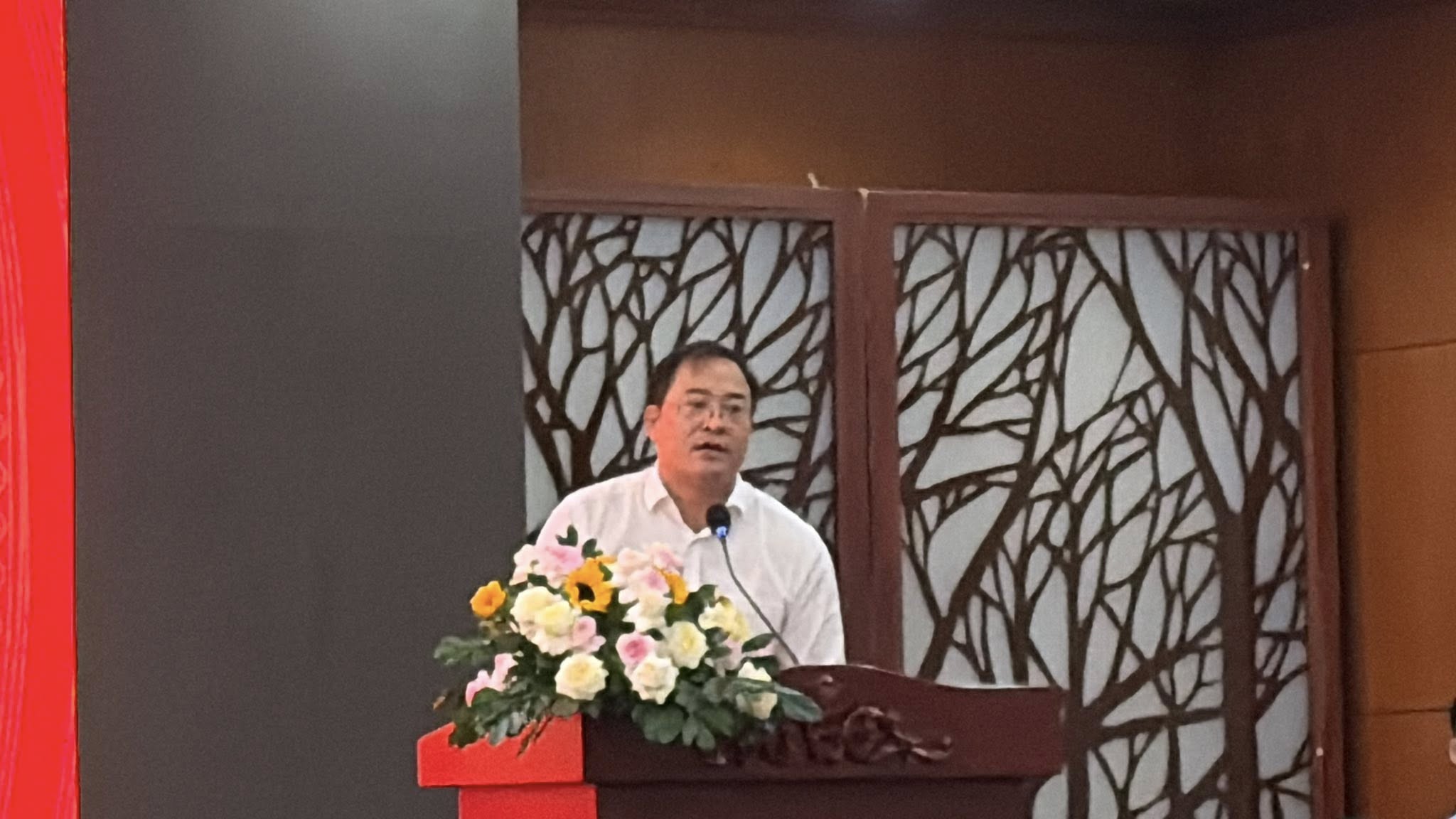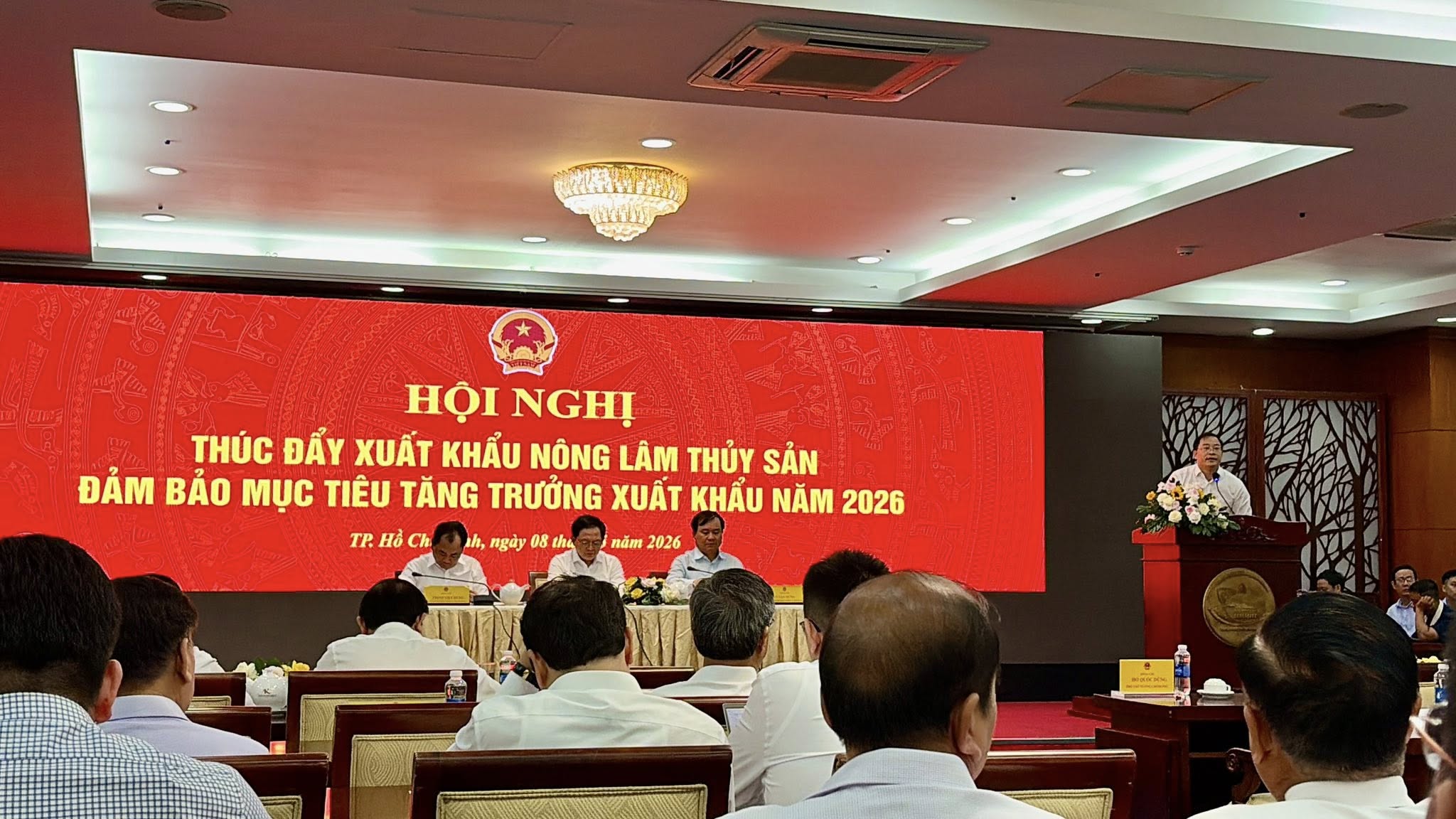

Attending the Conference, Mr. Nguyen Hoai Nam – General Secretary of the Vietnam Association of Seafood Processing and Export (VASEP) – presented a paper proposing several key solutions related to institutional reform, reducing compliance costs, removing obstacles in export procedures, developing raw materials, stabilizing labor, improving environmental and food safety policies, strengthening credit, promoting trade, and responding to international barriers, aiming to enhance competitiveness and create a foundation for sustainable growth in Vietnam's seafood exports.
The VASEP Portal Editorial Board is pleased to publish the content of the General Secretary's speech.
On behalf of the VASEP Association, I would like to express my sincere gratitude to the Government and the Ministry of Agriculture and Rural Development for their continued attention, guidance, and support for the Vietnamese seafood industry and seafood businesses.
Seafood exports in the first four months of 2026 continued to show signs of recovery, estimated at approximately US$3.7 billion, an increase of nearly 15% compared to the same period last year. The seafood industry has several opportunities to strive for a growth target of 8-10%, with export turnover exceeding US$12 billion in 2026 (an increase of approximately US$1 billion) - provided there is timely support and guidance from the Government, the Ministry of Agriculture and Environment, other Ministries, and localities in institutional reform, improving the business environment, reducing compliance costs, and addressing international trade barriers.
However, we recognize that the current context presents numerous challenges and difficulties that are negatively impacting Vietnam's seafood export production (such as raw material shortages, labor shortages, high production costs, diseases, trade barriers, trade defense investigations, equivalent regulations to restrict imports, some inadequacies and obstacles in the institutional and legal framework, etc.).
We are also very pleased that four days ago, on May 4, 2026, the Minister of Agriculture and Rural Development, Mr. Vo Van Hung, supported and immediately agreed to our proposal to organize dialogues at least twice a year between the Ministry of Agriculture and Rural Development and agricultural industry associations.
At today's conference, VASEP would like to report on some key recommendations for three important areas (institutional reform, reducing compliance costs; developing seafood raw materials for export processing; and expanding markets and competing internationally), with the hope that the Government, the Prime Minister, the Ministry of Agriculture and Environment, other ministries and localities will soon issue directives to remove obstacles and unlock resources for seafood production and export.
1. We propose timely and flexible implementation of regulations and administrative procedures related to the issuance of documents for export shipments at both central and local levels. Exporting a shipment is a significant effort for businesses and requires the attention and timely response of relevant authorities. In various stages, especially during the transitional period when new regulations are implemented or after decentralization to local levels, this process has encountered shortcomings.
We respectfully request that the Ministry of Agriculture and Rural Development and its relevant departments/divisions promptly review and amend the two circulars (81/2025 and 74/2025) to fundamentally address some obstacles and shortcomings related to the export of harvested seafood to the EU and the US. VASEP has also closely and regularly collaborated with the Ministry's functional units to identify and summarize the inadequacies over the past period – such as the forms and procedures for issuing Certificates of Origin (C/S), Certificates of Conformity (C/C), and Pre-Purchasing Authorization (P/S) to the EU or Certificates of Analysis (CoA) under the MMPA Act to the US. It is necessary to digitize the process, simplify documentation, adapt it to small-scale fishing, and standardize the understanding and implementation across localities.
2. Also related to Circular 81/2025 of the Ministry of Agriculture and Environment, we propose that localities with fisheries management support exports and businesses in accessing raw materials from small-scale fishing and small vessels (sea shrimp, crab, etc.) – specifically, Circular 81 has adjusted the mechanism to allow the application of simplified Certificates of Origin (C/C) for small fishing vessels under 6m, ensuring easy procedures, suitable for small-scale fishing, while still meeting traceability requirements and combating IUU (Illegal, Unreported, and Unregulated) fishing. This is extremely significant for both the economy and livelihoods.
3. Regarding the control of imported seafood raw materials following the recommendations of the EC inspection team on IUU (Illegal, Unreported, and Unregulated) fishing for the 5th time, the Ministry of Agriculture and Environment issued two Decisions (1136, 1145) and Official Letter 2808 – which includes a procedure for re-declaration (after the enterprise re-weighs) when there is a discrepancy in quantity (including natural loss due to product characteristics).
After detailed discussions with the parties involved, we propose that the Ministry of Agriculture and Environment review and reconsider the definition of "whole lot" to accurately reflect the reality: imported seafood in whole lots, in its original commercial condition, whether packed and transported by container or ship, is still considered a whole lot if it is bought and sold under a contract, in lots, and there is a natural discrepancy when re-weighing.
4. Regarding domestic marine exploitation, we propose that the Government and the Ministry of Agriculture and Environment review and adjust regulations on fishing zoning to align with the realities of the fishing industry and the requirements of combating IUU (Illegal, Unreported, and Unregulated) fishing – including considering certain specific fishing methods.
Currently, vessels over 15 meters in length but with small tonnage, limited power, and limited offshore capabilities are still required to operate in offshore areas according to regulations on fisheries zoning, while many traditional fishing methods, target species, and suitable fishing grounds are located in inshore areas. This not only reduces fishing efficiency and increases costs but can also prevent fishermen from maintaining their legitimate livelihoods. This issue also affects the supply of legally harvested raw materials for processing, consumption, and export, as well as traceability and certification of raw materials in accordance with IUU regulations.
5. Regarding labor in the seafood industry, it is recommended to prioritize the development, planning, and stabilization of human resources for domestic seafood processing enterprises; to discourage mass labor export from areas experiencing labor shortages; and to rationally plan factories and industries within the same area to avoid localized labor competition.
The current situation in the seafood processing industry is a serious labor shortage, directly impacting factory capacity, delivery schedules, and the ability to expand production and export. Local workers tend to switch to other professions, seek overseas employment, or quit to receive unemployment benefits, rather than committing to long-term employment with factories.
6. Proposal for Developing Aquatic Raw Materials for Export Processing
As a key economic sector developing on a large scale and deeply integrated into the global market, "aquatic raw materials for export processing" is a prerequisite for maintaining and developing a top-tier global supply capacity. We propose that the Ministry of Agriculture and Environment direct the development of a comprehensive program on stabilizing and developing aquatic raw material sources for export processing, including domestic aquaculture, fishing, and raw material imports.
Regarding aquaculture, we propose focusing on three core issues: seed quality, disease control, and reducing production costs. We recommend that localities maintain and expand planned aquaculture areas on land, in rivers, and at sea; and simultaneously review areas already allocated but slow to develop or with minimal investment, leading to resource waste.
Regarding marine exploitation, we propose continued investment in fishing port infrastructure, mooring areas, fishing vessel monitoring systems, electronic logbooks, and databases on catch volume and origin. This is both a requirement to combat IUU (Illegal, Unreported, and Unregulated) fishing and a foundation for ensuring a legal supply of raw materials for processing and export.
VASEP boldly proposes that the Government and the Ministry of Agriculture and Environment assign the Association to research and develop a plan for developing seafood raw materials for processing and export, with the goal of creating a sufficiently strong raw material base for the seafood industry to aim for an export turnover of 15-20 billion USD/year in the coming period.
7. Regarding the draft amendment to the 2010 Food Safety Law, it aims for a risk-based management approach, shifting from pre-inspection to post-inspection, and from batch-by-batch management to risk management based on data and the compliance history of businesses.
We propose that the Government, the Prime Minister, and the Ministry of Agriculture and Environment add two "legal gaps": regulations on the minimum detection threshold of testing equipment (MRPL) and allowing the conversion of imported goods for export production/processing to domestic consumption and vice versa.
8. Regarding the Draft Law amending the 2020 Environmental Protection Law and Decree 08/2022/ND-CP
VASEP respectfully requests the Government, the Prime Minister, and the Ministry of Agriculture and Environment to allow factories within industrial parks to flexibly apply two mechanisms: connection and conditional exemption from connection to the industrial park's centralized wastewater treatment system. In cases where enterprises connect, the industrial park should publicly and transparently disclose the wastewater treatment unit price to avoid the current situation of excessively high costs.
In cases where enterprises have already invested in wastewater treatment systems that meet standard A, have automatic monitoring, are connected to the management agency, and submit periodic reports, we request permission to be exempt from connection to the centralized treatment system.
9. Recommendations on Private Investment in Irrigation and Aquaculture Infrastructure
We propose that the Government and the Prime Minister consider developing a Law on Private Investment in Irrigation and Agricultural Infrastructure, or adding a specialized chapter to the Law on Irrigation and the Law on Investment, to establish a clear licensing process, recognize ownership rights of facilities and water service providers, and provide preferential policies on land, credit, and taxes for businesses participating in investment.
10. Regarding the Export Promotion Fund for specific product sectors:
We propose that the Prime Minister and the Ministry of Industry and Trade direct the early issuance of a Decree detailing Clause 2, Article 9, Clause 4, Article 12, and Article 13 of Resolution No. 250/2025/QH15 of the National Assembly on some specific mechanisms and policies to enhance the effectiveness of international integration, allowing industry associations with a high export proportion to establish an Export Promotion Fund for specific product sectors to support and promote resources and development.
11. Recommendations on Credit, Trade Promotion, and International Barriers
We respectfully request the Prime Minister and the State Bank of Vietnam to continue maintaining the preferential credit package for agriculture, forestry, and fisheries, and to establish mechanisms to help farmers, fishermen, and small and medium-sized enterprises (SMEs) access capital more easily.
Regarding markets, we respectfully request the Government, the Ministry of Foreign Affairs, the Ministry of Industry and Trade, and the Ministry of Agriculture and Rural Development to strengthen economic diplomacy and trade promotion in key markets such as the United States, the EU, China, Japan, South Korea, ASEAN, the Middle East, the UK, and Australia.
In particular, with regard to the US market, we request that ministries continue to coordinate and support associations and businesses in trade defense cases, anti-dumping, anti-subsidy, equivalence assessment, MMPA, SIMP, and allegations related to forced labor (301). With the EU, we request continued top priority in removing the IUU yellow card, while supporting businesses in meeting new standards on traceability, environment, and sustainable development.
The seafood business community is committed to continuing technological innovation, improving compliance capabilities, developing value-added products, diversifying markets, and working alongside management agencies in building a transparent, responsible, and sustainable seafood industry.
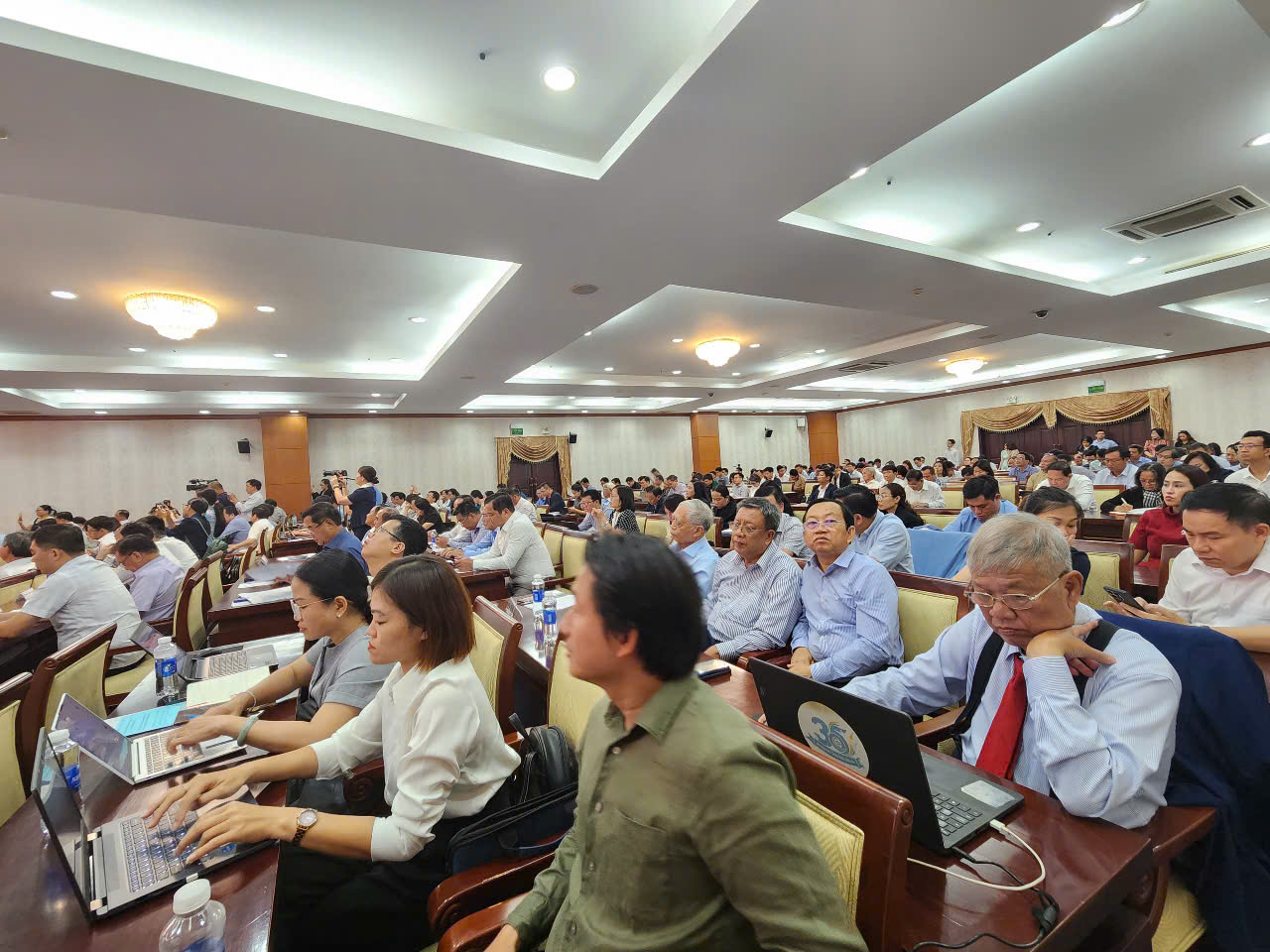
Some images from the Conference: