


From Middle East Fluctuations to Plastic Resin Prices
From the beginning of 2026, the raw plastic materials market has seen significant fluctuations due to the combined impact of oil prices, petrochemical supply risks, and logistics disruptions on key shipping routes. According to Reuters, disruptions to oil and petrochemical flows through the Strait of Hormuz have tightened global chemical supplies, pushing plastic and polymer prices to approximately four-year highs. The Middle East is expected to account for over 40% of global polyethylene exports in 2025, while PE and PP are two key raw material groups for the plastic packaging industry.
In Vietnam, some market sources indicate PE prices are expected to increase by approximately 15–30%, PP by 12–25%, and PET by 15–30% from the beginning of 2026. Notably, the Vietnamese plastics industry is currently heavily dependent on imported raw materials, estimated at over 70%; plastic resins also typically account for a large proportion of the cost of plastic product manufacturing. Therefore, when international oil, plastic resin, and logistics prices fluctuate, domestic plastic raw material prices are often quickly affected, leading to increased packaging production costs.
Observations from the domestic market show that the price of plastic raw materials for packaging production increased sharply at times after Tet (Lunar New Year). During the peak period in March and early April, the price of some raw materials increased from around 25,000 VND/kg to over 40,000 VND/kg. Recently, prices have cooled down slightly but remain significantly higher than before Tet.
Double Pressure on Export Competitiveness
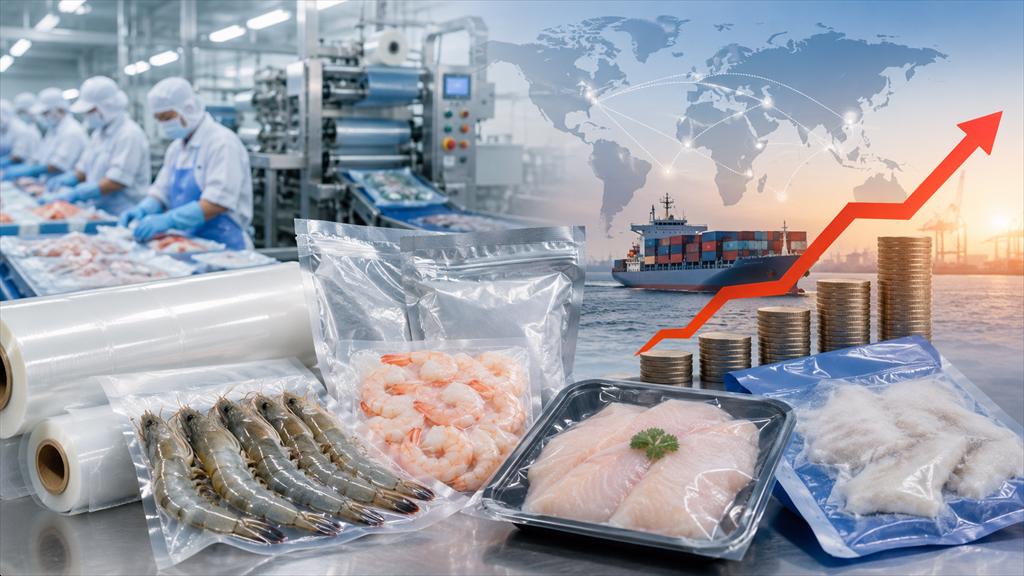
Packaging price fluctuations are occurring against the backdrop of multiple pressures facing seafood businesses simultaneously: raw material prices, logistics costs, quality control requirements, traceability, sustainability standards, and price competition in importing markets. These costs are not easy to reduce, as export packaging must meet food safety requirements, freezing durability, preservation capabilities, labeling information, and specific importer requirements.
This pressure is further compounded by disruptions in maritime transport. The WTO stated at a meeting on May 28, 2026, that leaders of major shipping companies warned of increased costs and capacity pressure due to goods being diverted to alternative routes due to risks in the Gulf and maritime bottlenecks. The ICIS also noted the temporary suspension of some shipping routes in and out of the Strait of Hormuz, while some entities are applying war risk surcharges to goods traveling to and from the Middle East.
Fluctuations in plastic packaging prices are also considered a risk to the input costs of the seafood industry in the second half of 2026. This is not just a problem for the plastics industry alone, but has spread to industries that use a lot of packaging, especially frozen food and seafood exports.
In the context of rapidly increasing input costs, export businesses also need support through measures such as enhanced early warning information, facilitating the import of materials for export production, and continuing to reduce unnecessary logistics costs, specialized inspection costs, and compliance costs.
In the context of increasingly fierce export competition, controlling and reducing input cost pressure will not only help businesses maintain orders but also contribute to maintaining the competitiveness of Vietnamese seafood in the international market.